
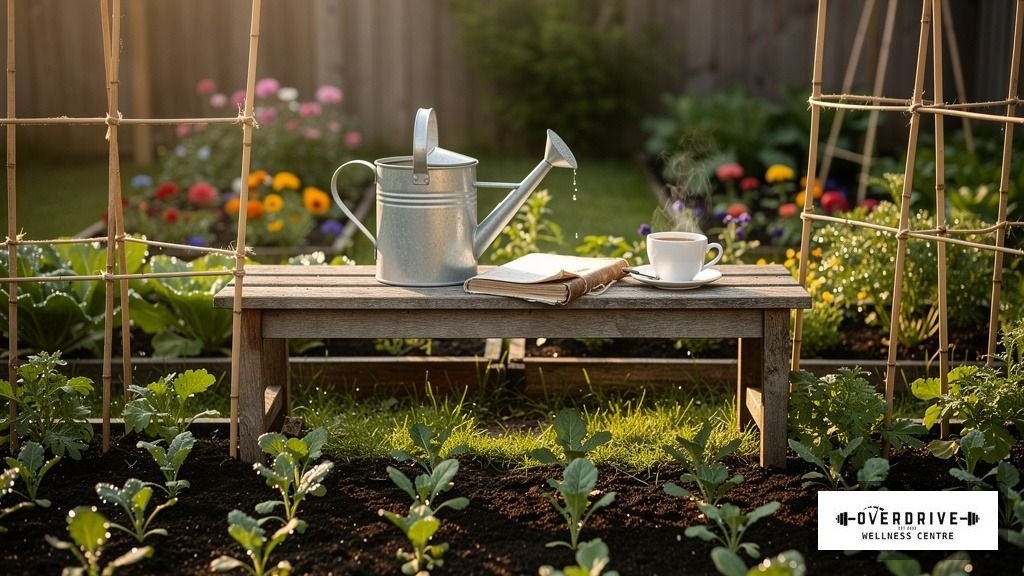
This is a parable, not a case study. The old kinesiologist and her garden are invented, but the lessons are real ones. Recovery and lasting wellbeing grow the way a garden does: through steady, attentive, unglamorous care rather than dramatic effort. Each tip below comes from something the gardener does with her plants, translated into how you might look after your own body. None of it replaces an individual assessment, and the parable is meant to help you think, not to tell you what is wrong with you.
The parable
There was once a kinesiologist who, after many years of helping people move better, spent her mornings in a small garden behind her house. Kinesiology is the scientific study of human movement, and she liked to say that her garden taught her the same lessons her work did, only more slowly and with more dirt under her fingernails. Younger visitors would stop by the fence and ask how she kept everything thriving. She never gave them one big secret. She gave them small habits instead, and those habits are the tips that follow.
- Steady, sustainable movement habits usually serve recovery better than occasional heroic sessions.
- Sharp pain, swelling, numbness or worsening pain deserves a qualified assessment; sudden or severe symptoms need urgent care.
- Judge progress over months rather than single sessions, since timelines differ between people.
Lessons from the garden
1. Look at the soil before you look at the flowers
When a plant looked tired, the gardener did not start by trimming leaves. She checked the soil first: whether it was too dry, too packed, or missing what the roots needed. In your own life, the “soil” is the foundation underneath your training and recovery, things like sleep, food, stress and daily movement. A sore shoulder or a stalled programme often gets attention on its own, while the conditions it grows in go unexamined. Before chasing a single symptom, it is worth taking an honest look at the basics that support everything else.
2. Water a little every day rather than flooding once a week
She learned early that drenching the beds on Sunday and ignoring them until the next Sunday left the roots shallow and stressed. Small, regular watering produced sturdier plants. Movement works in a similar spirit. A short, consistent routine of mobility or strength work that you can actually keep up tends to serve you better than an occasional heroic session followed by days of soreness and avoidance. The goal is a habit sustainable enough to survive a busy week.
3. Learn the difference between a wilting leaf and a dying root
Some wilting simply meant the afternoon had been hot, and the plant recovered by evening. Other signs, such as blackened stems or rot at the base, needed attention right away. Your body sends both kinds of signals too. Ordinary muscle tiredness after a new workout is different from sharp pain, swelling, numbness, or pain that stays or worsens. The gardener’s rule was simple: if something looks unusual or alarming, stop guessing and ask someone qualified to look at it. Sudden or severe symptoms call for urgent or emergency care, not a routine appointment, and certainly not a garden parable.
4. Prune with a purpose, not out of impatience
Pruning helped her roses, but only when she knew why she was cutting. Snipping at random because she felt restless did more harm than good. In recovery, rest and reduced load are a kind of pruning. Taking a deliberate step back from an aggravating movement can give the rest of your body room to keep progressing. Dropping everything out of frustration, or pushing through because rest feels like failure, rarely helps. Decide what you are pausing, why, and what you will keep doing in the meantime.
5. Stake the young plants while they are still growing
New seedlings in her garden got a light stake so the wind would not snap them before their stems strengthened. She removed the stakes gradually once the plants could stand on their own. Support during recovery can follow the same logic: guided exercises, modified movements, or a lighter version of your usual training while strength and confidence rebuild. Support is not meant to be permanent. It is meant to be loosened bit by bit as you become more capable.
6. Rotate the beds so the soil can rest
She never planted the same crop in the same bed year after year, because it wore out the soil. In training terms, doing the same movements with the same intensity every day can leave certain tissues overworked while others go underused. Varying your activity, balancing pushing with pulling, effort with easier days, and strength with mobility, spreads the load more evenly. A balanced week often matters more than any single impressive session.
7. Keep a garden notebook
On a shelf in her shed sat a worn notebook with dates, weather, what she planted, and what struggled. Over time it showed patterns she would never have noticed from memory alone. A simple log of your sleep, training, meals, energy and any aches can do the same for you. It also makes conversations with a practitioner more useful, because you can describe what actually happened instead of reconstructing it on the spot.
8. Ask the neighbours who grow different things
The gardener knew a great deal about vegetables and very little about fruit trees, so she asked the neighbour with the orchard. Good care often involves more than one perspective. Movement, nutrition, and hands-on care each look at the body from a different angle, and a team that talks to each other can see more than any one person alone. When you seek support, it helps to choose practitioners who are open about what falls inside their scope and who will point you elsewhere when something falls outside it.
9. Measure growth by seasons, not by afternoons
Visitors sometimes wanted to know why a plant looked the same as last week. She would point to photos from the spring instead. Progress in strength, mobility or recovery is often hard to see day to day and much clearer over months. Judging yourself by a single bad session can make steady work feel pointless. Comparing where you are now with where you were a season ago gives a fairer picture, while accepting that timelines differ from person to person.
10. Enjoy the garden while you tend it
The last habit was the one she cared about most. She sat on the bench, drank her tea and looked at what was growing, not only at what still needed work. Recovery and wellbeing are not just tasks to finish. Choosing movement you enjoy, noticing small gains, and allowing yourself some ease along the way makes the whole process more likely to last.
Carrying the lessons out of the garden
The parable is deliberately gentle, and real bodies are more complicated than flowerbeds. The tips above are general principles about consistency, attention, balanced load, support and patience. They cannot tell you what is behind a specific ache or what programme suits your history and goals. That takes an individual assessment by a qualified practitioner who can look at how you actually move.
If you would like that kind of guidance, Overdrive Wellness has BCAK-registered kinesiologists who focus on active rehabilitation, and you can read more on the Kinesiology page or get in touch through Contact Us to ask about current session options and rates.
This article is for general information only and does not constitute legal, technical, or professional advice. Always consult a qualified professional for guidance specific to your situation.
Is the old kinesiologist a real person?
No. The kinesiologist and her garden are invented for this parable. The lessons are general principles about consistency, attention, balance and patience, not a real case study.
How do I know when a symptom needs more than rest?
The article distinguishes ordinary tiredness after new activity from signs like sharp pain, swelling, numbness, or pain that stays or worsens. Unusual or alarming signs warrant asking a qualified practitioner, and sudden or severe symptoms call for urgent or emergency care rather than a routine appointment.
Why keep a log of training and recovery?
A simple log of sleep, training, meals, energy and aches can reveal patterns you might not notice from memory, and it makes conversations with a practitioner more useful because you can describe what actually happened.
- What Is Kinesiology? A Research Guide — CASRAI — Kinesiology defined as the scientific study of human movement
Last updated: 2 November 2026


