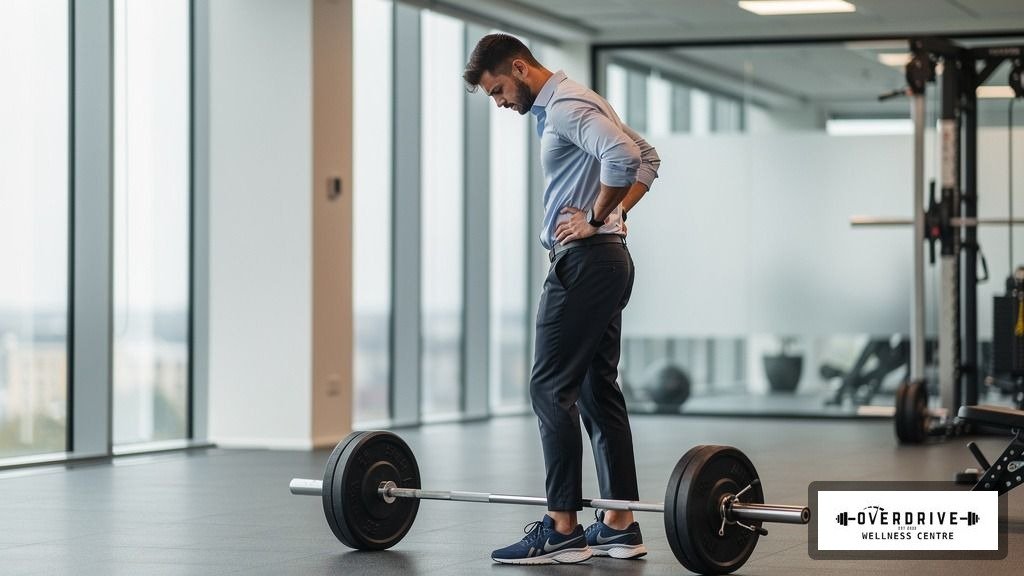
Lower back discomfort after deadlifts can be unsettling, but it is not always a cause for alarm. The key is to distinguish between expected muscle soreness and the signs of a potential injury. Normal soreness, often called Delayed Onset Muscle Soreness (DOMS), feels like a dull, generalized ache that commonly begins around 12–24 hours after unfamiliar or demanding exercise and can be most noticeable during the following 24–72 hours, fading within a few days. In contrast, pain from an injury is often sharper, more immediate, and may come with other symptoms. Understanding these differences is the first step toward a safe and effective recovery.
Is It Soreness or an Injury?
Understanding the difference between muscle adaptation and injury is a key skill for lifters. While the character of the pain—such as dull and generalized versus sharp and localized—can provide useful clues, these sensations alone cannot reliably diagnose DOMS or an injury. The timing and location of the discomfort also provide important information.
Injury risk can be influenced by training load, technique, fatigue, and recovery; gradual progression and listening to your body’s signals are key components of managing this risk.
Signs of Normal Muscle Soreness (DOMS)
Delayed Onset Muscle Soreness is a common response to strenuous exercise. DOMS commonly occurs after unfamiliar or more demanding exercise, but soreness is not required for a workout to be effective. DOMS may be felt in muscles challenged during deadlifting, including the glutes, hamstrings and spinal erectors.
Key characteristics of DOMS include:
- Timing: The discomfort commonly begins around 12–24 hours after you train and can be most noticeable during the following 24–72 hours.
- Sensation: It usually feels like a dull, generalized ache or stiffness, not a sharp or stabbing pain.
- Duration: It should gradually subside over a few days.
Temporary post-exercise muscular discomfort or fatigue that fades within a few hours of finishing your workout is also a normal part of training and is distinct from DOMS.
Signs of a Potential Injury
In contrast to soreness, injury-related pain may signal that a structure like a muscle, ligament, or disc has been strained beyond its capacity.

Key characteristics of injury-related pain include:
- Timing: The pain often appears suddenly during a lift or immediately afterward, rather than building gradually.
- Sensation: The pain is often described as sharp, burning, or shooting and might be localized to a specific spot.
- Duration: Symptoms deserve further assessment when they are worsening rather than gradually improving, significantly limiting normal activity, repeatedly returning with training, or accompanied by neurological or systemic symptoms.
When You Should Get an Assessment
If your pain does not align with typical DOMS, seek a professional opinion. Schedule an assessment with a qualified healthcare professional if you experience:
- Pain that disrupts your sleep or wakes you up at night.
- Intense pain that persists or worsens.
- Pain that prevents you from performing normal movements.
Red Flags: When to Seek Medical Attention
Certain symptoms, often called “red flags,” require medical attention as they could indicate a potentially serious neurological or spinal condition.
Seek immediate medical attention (e.g., go to an emergency department) for:
- New or significant changes in bowel or bladder control.
- New numbness in the genital or “saddle” area.
- Severe or rapidly worsening leg weakness, or an inability to move a leg.
- Significant neurological symptoms following major trauma.
Seek prompt medical assessment from a doctor or other qualified healthcare provider for:
- Sharp, shooting pain that radiates down into your leg(s), especially if it is new, severe, persistent, or worsening.
- Numbness, tingling, or progressive weakness in your legs, or an inability to lift your foot properly (foot drop).
- Other systemic symptoms like fever or unexplained weight loss accompanying the back pain.
Managing Soreness and Preventing Injury
If your symptoms are consistent with DOMS, management is straightforward. Gentle movement like walking, light stretching, and adequate rest can help.
Long-term, prevention is the best strategy. Injury risk and symptoms can be influenced by many factors, including training load, technique, fatigue, recovery, previous injury, and an individual’s tolerance. Gradual progression and listening to your body’s signals are key components of managing this risk. If you are unsure about your technique, working with a professional can provide valuable feedback.
If you are experiencing persistent pain or want to refine your technique, a professional assessment is a valuable step. At our Richmond, BC clinic, our team includes kinesiologists who are professional members of the British Columbia Association of Kinesiologists (BCAK) and chiropractors regulated by the College of Complementary Health Professionals of BC (CCHPBC). They can assess movement and function, provide guidance within their scope of practice, and recommend further medical evaluation when appropriate. Contact us for information on our services and current rates.
How can I tell if my back pain is normal soreness or an injury?
Normal muscle soreness, or DOMS, typically feels like a dull, generalized ache that begins 12–24 hours after your workout, peaks around 24-72 hours, and fades within a few days. In contrast, pain from a potential injury is often sharp, burning, or shooting, may appear suddenly during the lift, and can be localized to a specific spot.
When should I get my back pain assessed by a professional?
You should schedule an assessment with a qualified healthcare professional if you experience pain that disrupts your sleep, is intense and persists or worsens, or prevents you from performing normal movements. Symptoms that are worsening rather than improving or repeatedly return with training also warrant assessment.
What symptoms require immediate medical attention?
You should seek immediate medical attention (e.g., go to an emergency department) for new or significant changes in bowel or bladder control, new numbness in the genital or “saddle” area, severe or rapidly worsening leg weakness, or significant neurological symptoms following major trauma.
- phoenixrehabgroup.com — Claim supported: Differentiating between these is crucial for proper management and recovery; In contrast, injury-related pain is often sharper, more specific, or persistent; It often indicates muscle strengthening; Sharp, shooting pain during or after lifting that radiates down the legs; Pain that prevents normal movement; These symptoms may indicate more serious conditions such as disc injuries, nerve involvement, or severe muscle strains; Loss of bladder or bowel control
- hingehealth.com — Claim supported: Delayed Onset Muscle Soreness (DOMS) is a common and healthy response to strenuous exercise, including deadlifts; Mild soreness that fades within an hour or two after lifting is also considered normal muscle fatigue; Numbness or tingling sensations in the legs, groin, or inner thighs (saddle region); Weakness in the legs or foot drop; Difficulty walking or issues with balance; Pain that disrupts sleep or wakes you up at night; If pain is mild and consistent with DOMS, conservative treatments like rest, gentle movement, ice or heat application, and over-the-counter pain relievers may help; Proper form, adequate warm-up, gradual weight progression, and listening to your body's cues are essential for preventing lower back pain from deadlifts
- calibrationptkc.com — Claim supported: Injury-related pain is often sharper, more specific, or persistent; It may appear suddenly during or immediately after a lift
- elitehp.com.au — Claim supported: Numbness or tingling sensations in the legs, groin, or inner thighs; Weakness in the legs or foot drop; Continuous, intense lower back pain that persists or worsens over time; Loss of bladder or bowel control; Fever, unexplained weight loss, or pain that feels significantly different from typical muscle soreness
- physiovillage.ca — Claim supported: Sharp, shooting pain that radiates down the legs; Numbness or tingling sensations in the legs, groin, or inner thighs; Weakness in the legs or foot drop; Loss of bladder or bowel control; These symptoms may indicate more serious conditions
- austinmanualtherapy.com — Claim supported: Proper form, adequate warm-up, and gradual weight progression are essential for preventing lower back pain from deadlifts.
Last updated: 22 September 2026