In a quiet room filled with the soft grey light of morning, two athletes moved. They were not racing each other, but themselves.
The first was the Hare. His movements were explosive, impressive. He would push through a set with ferocious energy, sweat beading on his brow, his breath a sharp gasp. He chased numbers, repetitions, the feeling of exhaustion that felt like victory. Then he would stop, spent, needing long breaks where frustration flickered in his eyes. He was all surge and collapse, a thunderstorm passing through.
The most common mistake in recovery isn’t going too slow; it’s rushing back too fast after a few good days. True, lasting strength is built by consistently respecting your body’s current limits, not by chasing last month’s personal best. This is where a structured, professional plan makes all the difference.
The second was the Tortoise. His movements were deliberate, measured, almost timid. He stayed well within his limits, his form perfect but his effort minimal. He never risked failure, never felt the strain that signals growth. Each session was identical to the last, a safe and repeatable ritual. He was all caution and containment, a garden pond with no current.

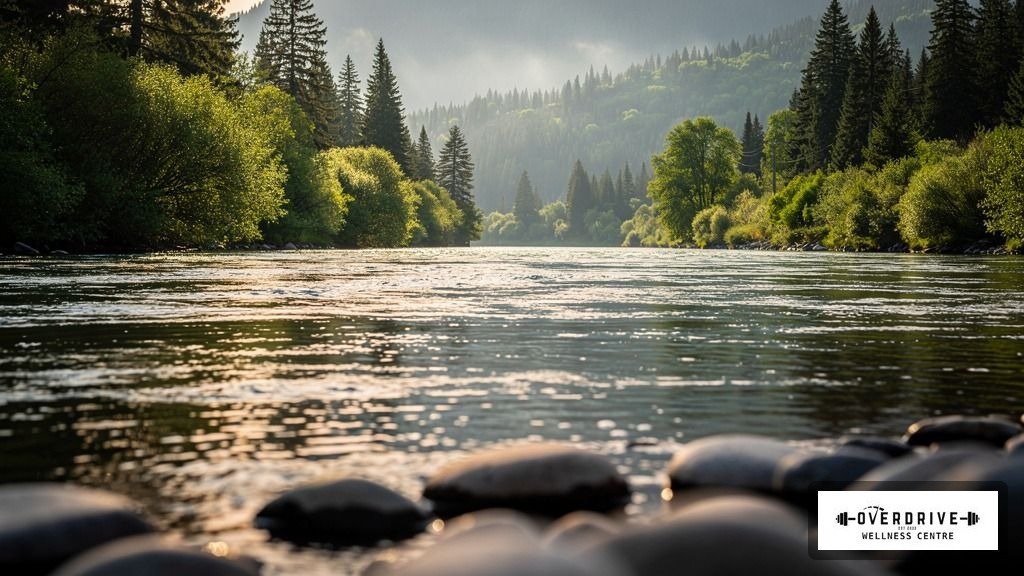
A guide watched them both from a corner of the room, saying nothing. They did not praise the Hare’s power nor correct the Tortoise’s caution. Instead, they turned and looked out the large window. Below, a great river moved toward the sea. It was not slow, and it was not fast. It was simply relentless.
The guide watched how the water surged through narrow channels, its power focused and immense. They watched how it spread out in the wide, calm flats, moving with an almost invisible patience. They saw the eddies swirling backward near the bank, moments of reverse that were still part of the river’s forward journey. They saw how the water yielded to a great stone, flowing around it without struggle, and how, over years, it was the water that shaped the stone.
The river did not have good days and bad days. It did not have personal bests. It did not fear the rocks or resent the slow plains. It simply expressed its nature, responding to the landscape it found itself in, its momentum a constant, undeniable presence. It held both the power of the Hare and the persistence of the Tortoise, but was a slave to neither.
The guide turned back to the room. The Hare was now stretching, impatient. The Tortoise was packing his bag, satisfied with another safe day. The guide smiled softly. The work was not to coach a race between two opposing forces. It was to help each person discover the river within themselves, and to trust its flow.
How do I know if a wellness practitioner in Richmond, BC is qualified?
In British Columbia, some health professions are regulated by government-mandated colleges, while others are guided by professional associations. For example, Physiotherapists are regulated by the College of Health and Care Professionals of BC (CHCPBC) and Registered Massage Therapists (RMTs) by the College of Complementary Health Professionals of BC (CCHPBC). Kinesiologists, while not government-regulated, adhere to high professional standards through membership in the BC Association of Kinesiologists (BCAK). Always check for these credentials to ensure you are working with a qualified professional.
What does a holistic recovery program at Overdrive Wellness typically involve?
A holistic program begins with a comprehensive assessment to understand not just the injury, but your lifestyle, goals, and overall physical condition. From there, we develop a personalized plan that integrates various modalities, which could include targeted exercises, manual therapy, and education on movement patterns. The focus is on sustainable progress, empowering you with the knowledge to manage your own well-being long-term. For details on our specific services and rates, please contact us directly.
What does a ‘holistic approach to recovery’ really mean?
A holistic approach, like the fable suggests, looks beyond the immediate problem. Instead of just focusing on the ‘fast’ or ‘slow’ of recovery, it considers the whole system: your movement patterns, nutrition, stress levels, and personal goals. It’s about understanding that a sore knee might be related to hip weakness or that progress has stalled due to factors outside the gym. It means treating you as a whole person, not just a symptom, to create lasting change.
When should I seek professional help for a recurring ache or athletic plateau in Richmond?
The ideal time to seek guidance is before a minor issue becomes a major one. If you’re experiencing a recurring ache that affects your training, or if your progress has stalled despite your best efforts, it’s a good sign to consult a professional. Early intervention can help you avoid the ‘Hare’s’ burnout from pushing through pain or the ‘Tortoise’s’ stagnation from being overly cautious, guiding you toward a more effective and sustainable path forward. You can learn more about our team of experts on our website.
- College of Complementary Health Professionals of BC (CCHPBC) — The regulatory body for chiropractors and registered massage therapists in British Columbia.
- College of Health and Care Professionals of BC (CHCPBC) — The regulatory body for physiotherapists, dietitians, and other health professions in British Columbia as of June 2024.
- BC Association of Kinesiologists (BCAK) — The professional association for kinesiologists in British Columbia, promoting professional standards and ethics.
Last updated: 4 September 2026